The Young Scholars Programme provides a research award of 100,000 yen, courtesy of the Hugh E. Wilkinson Foundation
Call for Applications: The Ishibashi Foundation Network Leader Fellowship Programme in Japanese Arts 2025-26
Asiatic Society of Japan’s 2024 Young Scholars’ Programme
The final submission date for the Young Scholars’ Programme is Monday, 19 August, 12.00 midnight JST.
Make sure your application is ready as this is a great opportunity to showcase your research on Japan and/or Asia.
JSANZ 10th Anniversary Special Edition Newsletter
We included so much background, photos, information, and news was in our newsletter that the file size is too big to publish it all here at once. Here are some parts you might enjoy.
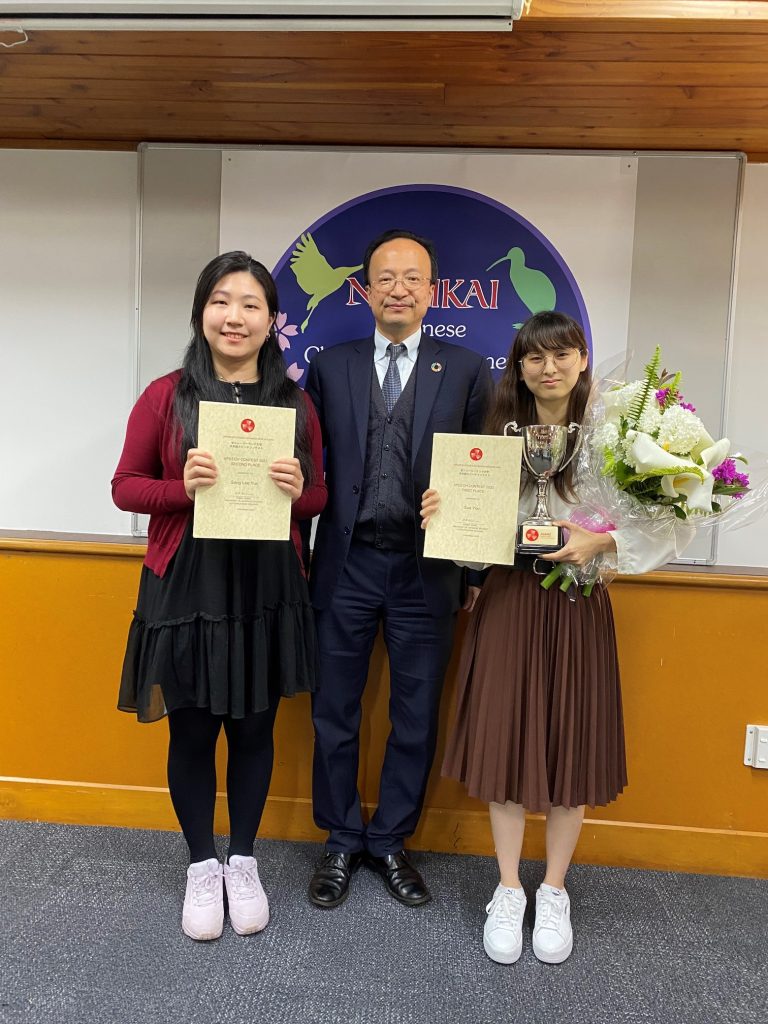
2023 JSANZ Tertiary Japanese National Language Speech Contest Prizegiving, University of Auckland
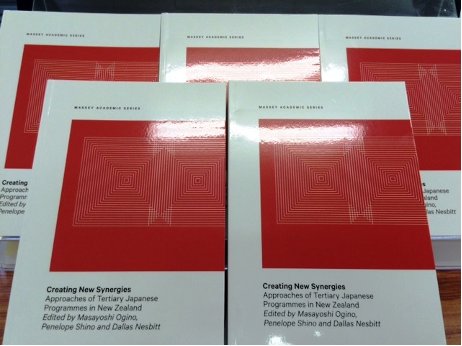
JSANZ publication Creating new synergies: Approaches of tertiary Japanese programmes
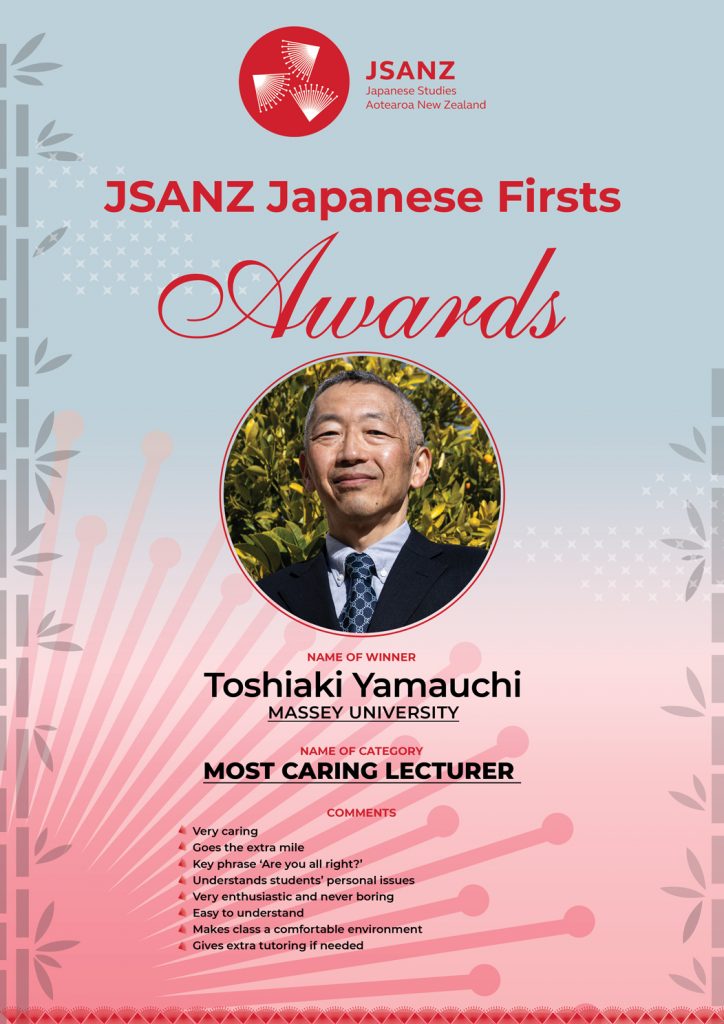
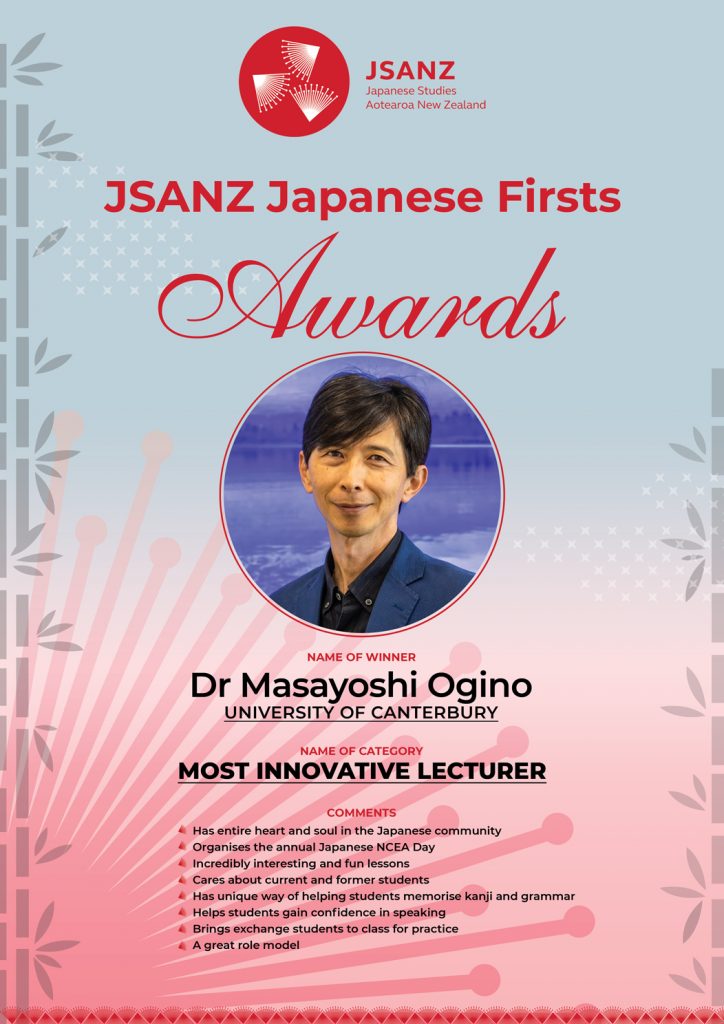
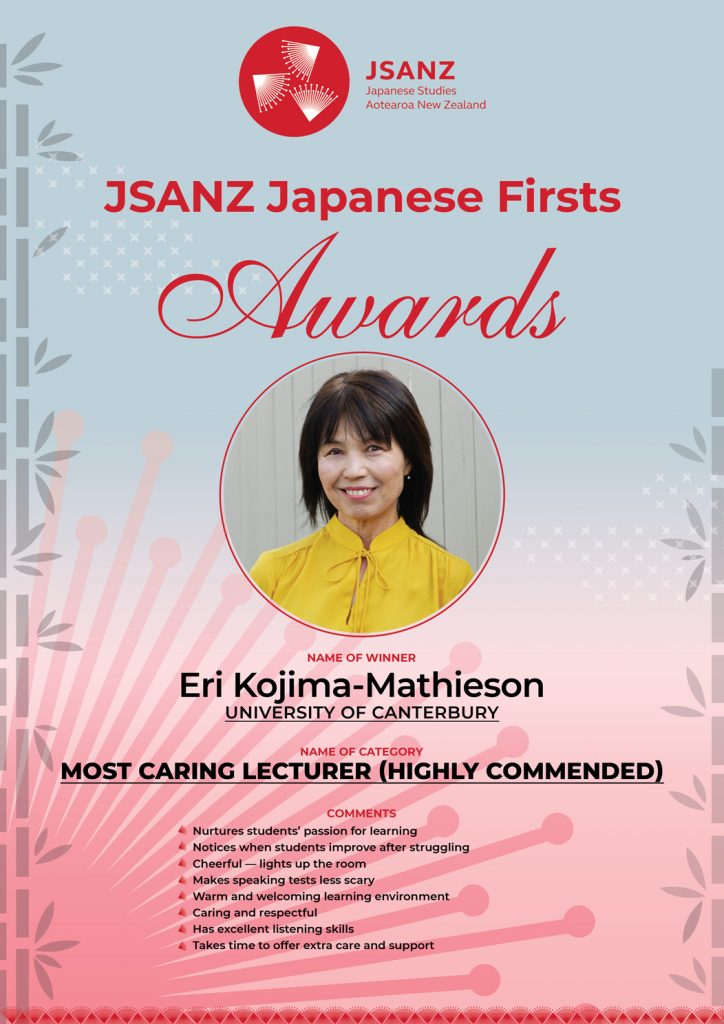
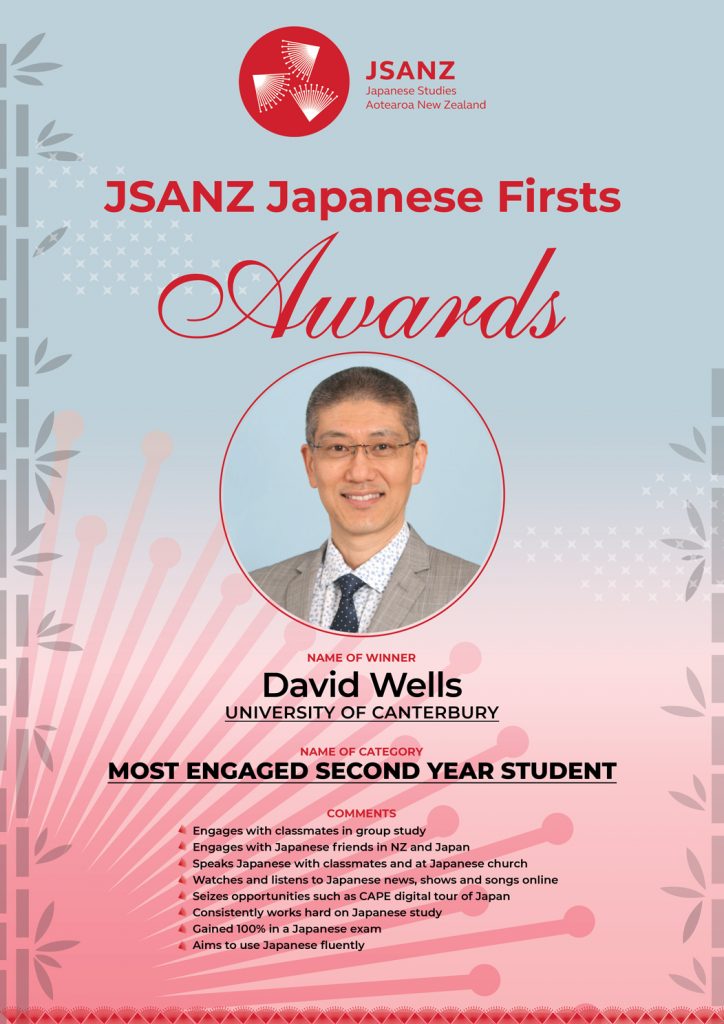
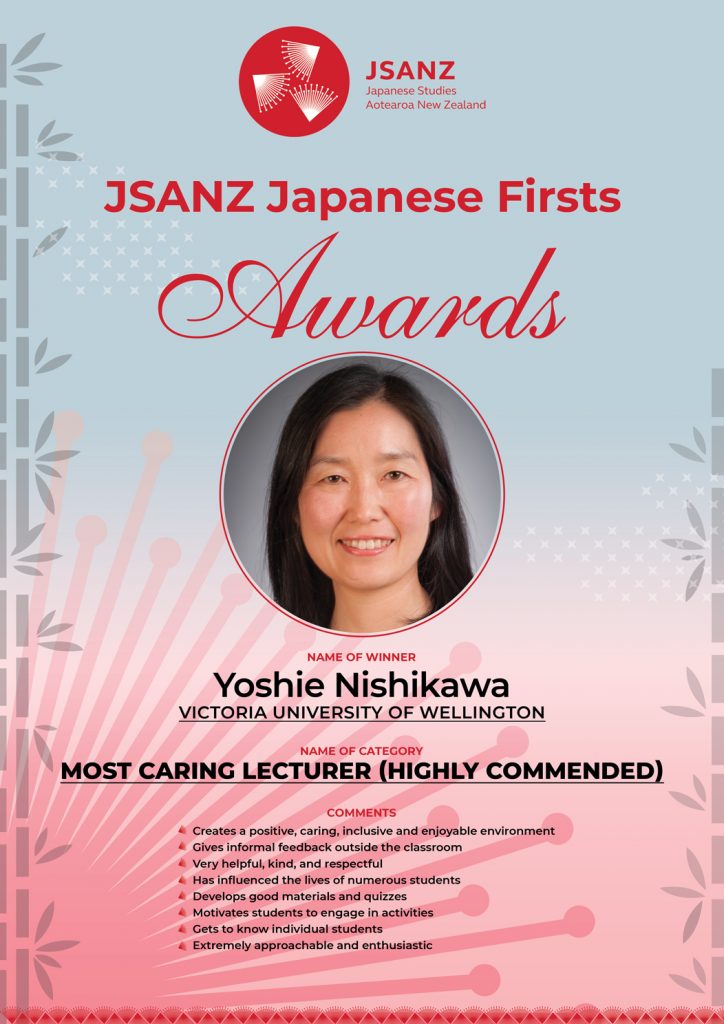
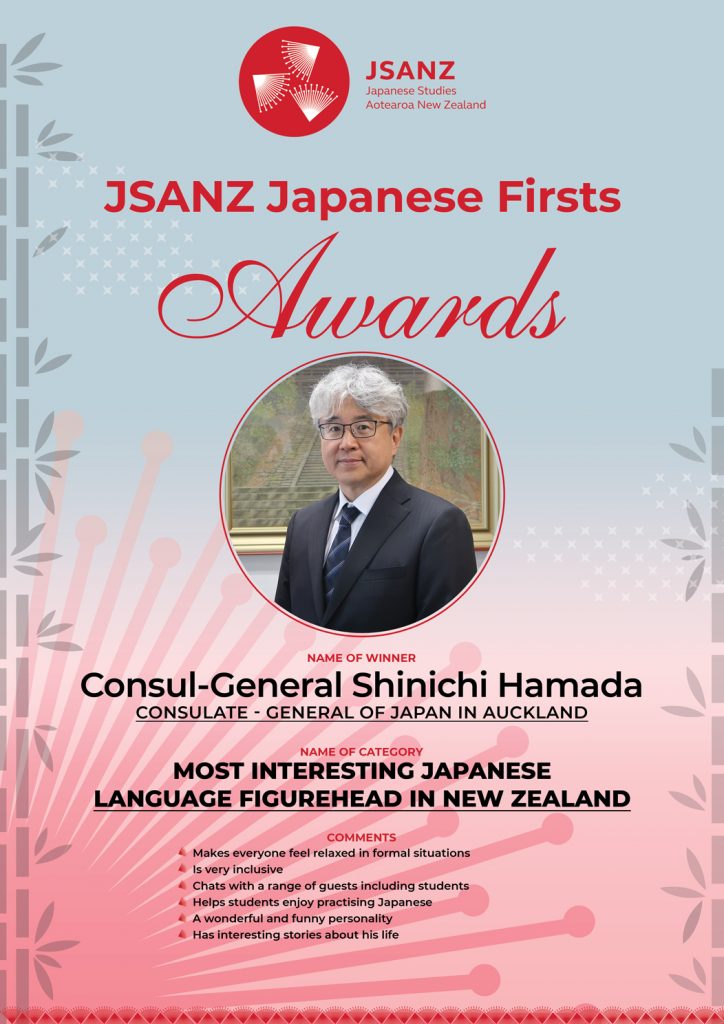
Next newsletter sections coming soon
2024 JSANZ Tertiary Japanese Language Speech Contest

JSANZ is excited to announce the 2024 Speech Contest. Here are some encouraging words from Takahashi sensei:
Dear All,
Thank you very much for your patience. I am very pleased to share with you this year’s JSANZ Speech Contest guidelines and the poster. Please be encouraged to participate in the contest with your students. As we are all aware, the humanities are all under severe pressure in the current academic climate in this part of the world, and we are all tasked with so many commitments on a daily basis. Yet, this is also a rare chance to promote our activities to those who normally do not have any knowledge of Japanese studies (including/especially [!] the senior leadership team of respective institutions). So, please tell not only your students but also your line managers and above about this event, as well as the significance of this kind of event for our students to grow both as a Japanese learner and as a young adult.
We look forward to receiving your work!
Yours Sincerely,
Shinnosuke Takahashi

JSANZ Special Edition Newsletter Coming Soon
It is officially the 10th anniversary of JSANZ (Japanese Studies Aotearoa New Zealand). Over the past few years the teaching and learning of languages has been beset on all fronts by a number of seemingly insurmountable issues (university redundancies and staff cuts; Artificial Intelligence; worldwide serious decline in language learner numbers; Covid and online learning problems etc.)
Our anniversary is a big reason to turn our backs on all of the above for a moment and celebrate, as is the increased interest, among New Zealanders, in Japan as a tourist destination. It is also an opportunity to do some soul searching and discussion about where we go from here.
A newsletter will be sent out to all members soon and we intend to include a selection of short clips from members that show what the general trends are and what the membership is thinking, so now is the perfect time to update us with your contact detail changes and give us your opinions. You can message us here on Facebook, or on our website www.jasanz.org
Get your responses in quickly before the Newsletter is completed.
Meanwhile congratulations and a huge thank you to the president and executive members of the JSANZ teachers network, to our stakeholders for their ongoing valued support and to all our members working for the cause of Japanese language and Japanese studies in the
background.
2023 Speech Contest Prizegiving Photos and Winning Speech
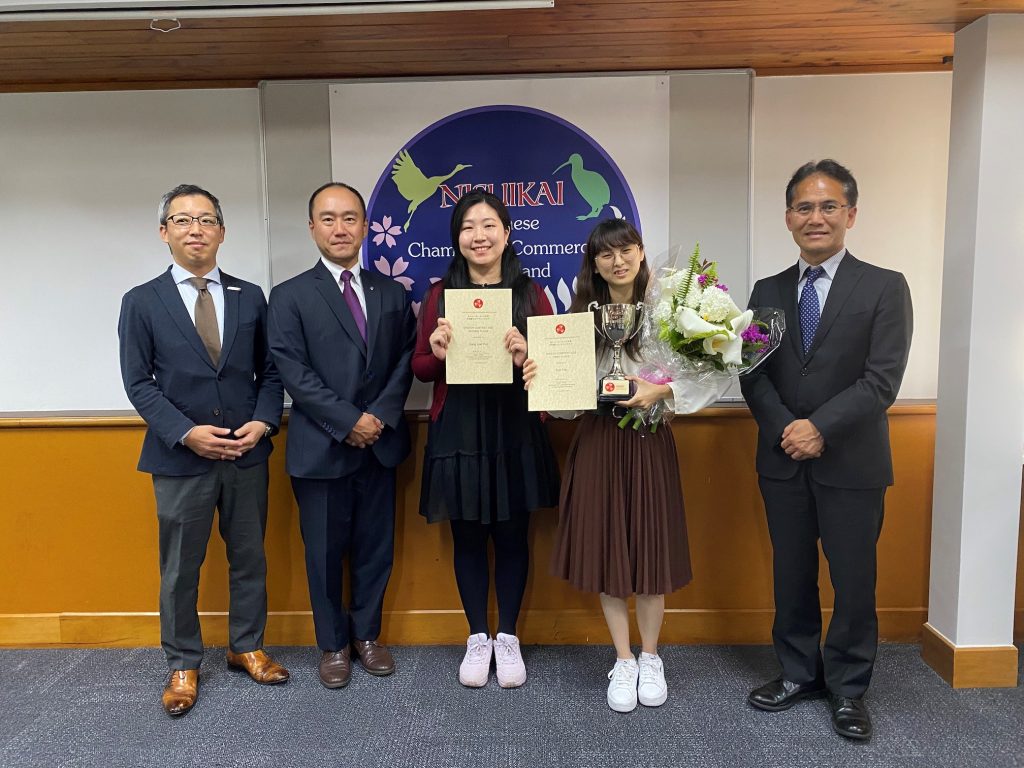

2023 JSANZ Tertiary Japanese Language Speech Contest Winners
Once again we are honoured to have so many high quality participants and to be able to congratulate three outstanding winners in the 2023 JSANZ Tertiary Japanese Language Speech Contest. The winner this year is Sua Yoo from Auckland University and in second place, Sang Lee Yun from University of Canterbury. Raz Tripp, also from University of Canterbury, was the third place winner.
We will give details of the prizegiving and provide videos of the winning speeches as soon as we can.
今年度スピーチコンテストの結果をご報告致します。
優勝者はオークランド大学のSua Yooさんとなりました。
2位は、Sang Lee Yunさん、3位はRaz Trippさんで、共にカンタベリー大学在籍です。
今年度は、オークランド、カンタベリー、オタゴ、IPU、ヴィクトリアの5校より9名のエントリーがありました。
参加者学生は全員、各大学の代表にふさわしい素晴らしいパフォーマンスを見せました。先生方はじめ関係者の皆さまの鋭意・専心ぶりに深く感謝申し上げます。
Japan Foundation Information and Support
[The Japan Foundation Program Guidelines for FY 2024]
The latest version of the Program Guidelines provides information and support for individuals and organizations applying for international exchange programs.
The Japan Foundation conducts programs for the three major areas of Arts and Cultural Exchange, Japanese-Language Education, as well as Japanese Studies and International Dialogue.
Please check the website for more details and application deadlines.
https://www.jpf.go.jp/e/program/
* Applications will be accepted electronically through the Japan Foundation’s Online Application Portal. Please check the website for details on application procedures.
****************************************